People
Faculty
Tom Emery
Dr. Tom Emery is the Deputy Director of ODISSEI, where he is responsible for the strategic development of the infrastructure and international collaborations. Emery is an Associate Professor in the Department of Public Administration and Sociology of Erasmus University Rotterdam. Before that, he was the Deputy Director of the Generations and Gender Programme (GGP) at the Netherlands Interdisciplinary Demographic Institute in The Hague. Emery gained a PhD in Social Policy from the University of Edinburgh in 2014 and his thesis examined the interaction between financial support between elderly parents and their adult children in a number of European countries. His research also covers questions of comparative survey methodology and policy measurements in multilevel contexts.
Javier Garcia-Bernardo
Dr. Javier Garcia-Bernardo is an assistant professor at Utrecht University in the Social Data Science (SoDa) team. Before that, he was a postdoc at the University of Amsterdam and at Charles University (CORPTAX), and a data scientist at the Tax Justice Network. In his research he applies computational models to understand social and economical systems. He completed his PhD in Political Economy at the CORPNET group (University of Amsterdam), and his MSc in Computer Science at the University of Vermont.
Malte Lüken
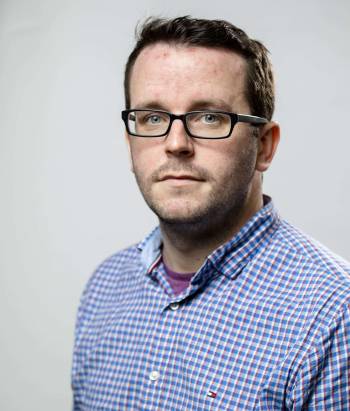
Malte Lüken is a Research Software Engineer at the Netherlands eScience Center, where he works in the social sciences and humanities domain. He holds a Research Master's in Psychology from the University of Amsterdam, specialising in research methods and applied statistics, and is an external PhD candidate in the Psychological Methods and Statistics group at the same university. His work applies amortised Bayesian inference to computational models of decision making, and he has contributed to the open-source statistics package JASP and applied machine learning to administrative data from Statistics Netherlands. He is a certified Carpentries instructor and teaches applied machine learning workshops.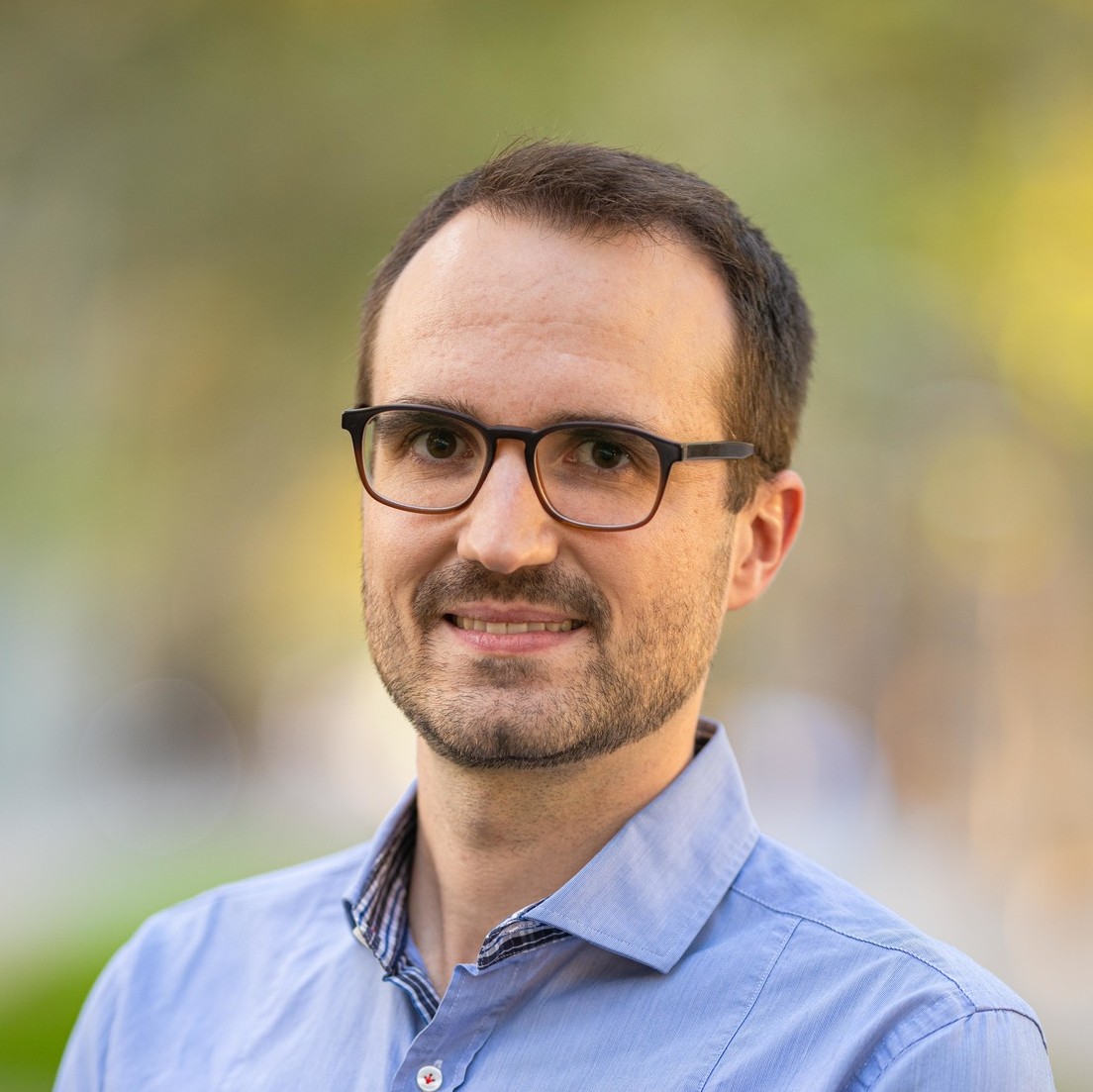
Flavio Hafner
Dr. Flavio Hafner is a Research Software Engineer at the Netherlands eScience Center, which he joined in 2022. He completed his PhD in labour economics at Universitat Pompeu Fabra in 2020 and subsequently held a postdoctoral fellowship at Aalto University. His work spans the social sciences, machine learning, and causal inference, with recent projects on privacy-preserving synthetic data generation and differential privacy applied to Dutch population data.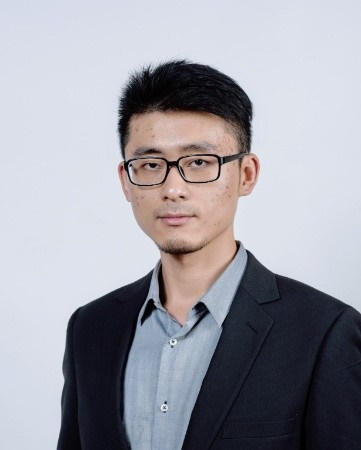
Qixiang Fang
Dr. Qixiang Fang is a researcher in Methodology and Statistics at the Faculty of Social and Behavioural Sciences, Utrecht University, and a member of the ODISSEI Social Data Science (SoDa) team. His research sits at the intersection of natural language processing, psychometrics, and the philosophy of science, with interests in machine learning, measurement quality, and survey methodology. He is a postdoctoral researcher on the EU IMPROVE project and teaches statistics and NLP courses at the bachelor's and master's levels.
Chirag Arora
Dr. Chirag Arora is a researcher in the Department of Values, Technology and Innovation at the Faculty of Technology, Policy and Management, Delft University of Technology. His work focuses on the ethics and philosophy of technology, including machine ethics, data ethics, and the responsible design of digital and health technologies. His publications address topics such as the ethics of gamification in health and fitness tracking, protecting user privacy when sharing health data, and agency in machine-generated assertions.Speakers
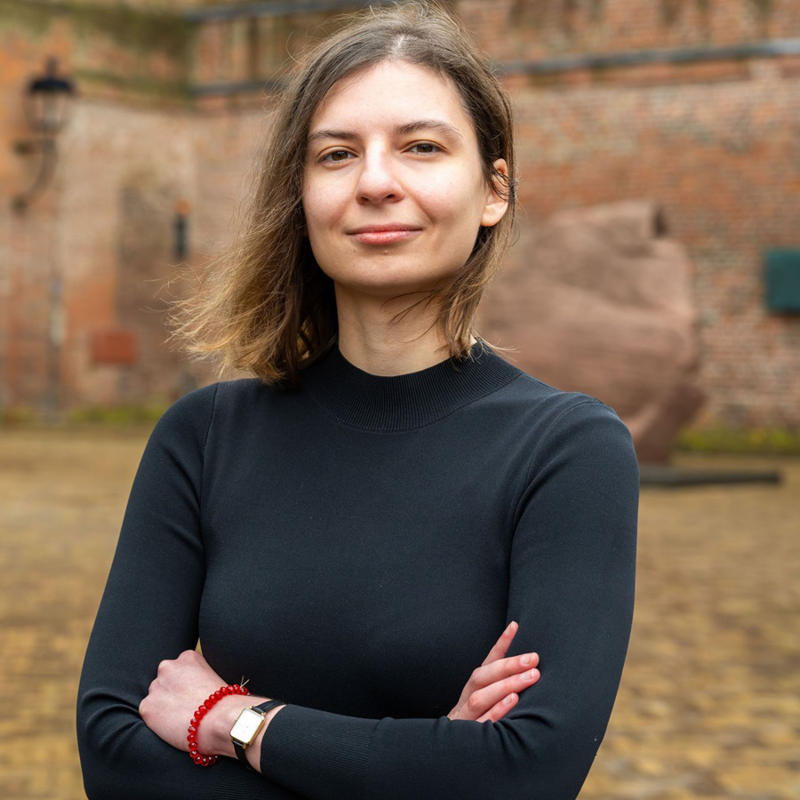
Ana Macanovic
Dr. Ana Macanovic is an Assistant Professor in the Department of Sociology at Utrecht University. Her research spans economic sociology, innovation, inequalities, and the emergence of trust and cooperation, examining how structural inequalities arise and dissolve and how diverse populations build trust while developing shared institutions. She treats societies as complex systems, drawing on a range of computational methods including automated text analysis, machine learning, network analysis, and agent-based modelling.
Elizaveta Sivak
Elizaveta Sivak is a sociologist and computational social scientist at the University of Groningen, where she works as a researcher and data scientist. She holds an MA in Sociology from HSE University and the Moscow School of Social and Economic Sciences, a joint programme with the University of Manchester. Her research combines quantitative and qualitative methods to study the predictability of fertility, with work published in venues such as PNAS and Royal Society Open Science. She is a co-organiser of PreFer, a data challenge on predicting fertility outcomes in the Netherlands.